The evolution of artificial intelligence and high-performance computing has created an unprecedented demand for ultra-high-speed interconnect solutions. As GPU clusters scale into the thousands of accelerators, the need for extremely low-latency, high-bandwidth, and short-reach connectivity becomes critical. In this context, 1.6T InfiniBand DAC solutions based on NVIDIA InfiniBand XDR architecture are emerging as a foundational technology for next-generation AI data centers. These cables enable direct, lossless, and cost-efficient interconnects between high-performance compute nodes.
Unlike optical solutions that rely on transceivers and fiber, DAC (Direct Attach Copper) cables provide a passive electrical connection, making them ideal for extremely short distances such as rack-to-rack or within a single AI compute pod. The introduction of OSFP224-based twin-port architecture further increases bandwidth density, allowing a single cable assembly to support dual 800G channels and achieve a total of 1.6T throughput. As a result, 1.6T InfiniBand DAC has become a key enabler of NVIDIA’s next-generation AI fabric.
With the rapid deployment of large-scale AI supercomputers, 1.6T InfiniBand DAC is increasingly used in NVIDIA InfiniBand XDR environments to support GPU-to-GPU and switch-to-switch communication. Its ultra-low latency characteristics, combined with high signal integrity over short distances, make it a critical component for building scalable and energy-efficient AI infrastructure.
What Is a 1.6T OSFP224 DAC Cable?
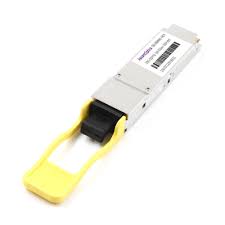
A 1.6T OSFP224 DAC cable is a passive twinax copper assembly designed to support two independent 800G links within a single OSFP224 form factor on each side. This architecture effectively delivers 1.6Tbps of aggregate bandwidth while maintaining extremely low latency and power consumption.
The OSFP224 interface is a next-generation high-density connector standard designed for ultra-high-speed networking. Compared to earlier OSFP and QSFP designs, OSFP224 provides significantly higher electrical bandwidth capacity and improved thermal characteristics, making it suitable for AI-scale networking environments.
In NVIDIA InfiniBand XDR systems, DAC cables are typically used for very short-reach connections (around 1 meter), where optical transceivers are unnecessary. By eliminating optical conversion, DAC solutions reduce power consumption, cost, and system complexity while maintaining maximum signal efficiency.
Key Features of 1.6T InfiniBand DAC Solutions
Twin-Port Architecture for 1.6T Bandwidth
One of the most important innovations in this DAC solution is the twin-port design. Each end of the cable contains two independent 800G electrical channels, allowing simultaneous transmission and reception of high-speed data streams. This architecture effectively doubles the throughput within the same physical footprint.
The dual-channel structure is particularly important for AI workloads, where massive parallel data exchange between GPUs and switches is required. By aggregating two 800G lanes into a single cable assembly, system designers can achieve higher port density and improved cable management.
Passive Copper Design for Ultra-Low Latency
Unlike active optical cables, DAC solutions are purely passive and do not require electrical-to-optical conversion. This results in near-zero latency and significantly lower power consumption. For AI training workloads that rely on synchronized computation across thousands of GPUs, minimizing latency is essential for maintaining performance efficiency.
The passive nature of DAC also eliminates the need for optical transceivers, reducing both cost and thermal load within high-density server racks.
High-Speed PAM4 Signaling
The 1.6T OSFP224 DAC relies on PAM4 (Pulse Amplitude Modulation 4-level) signaling to achieve high data rates over copper conductors. PAM4 allows two bits of data per symbol, effectively doubling bandwidth compared to traditional NRZ signaling.
This modulation scheme is essential for supporting 800G per channel performance while maintaining acceptable signal integrity over short distances such as 1 meter.
Why 1.6T DAC Is Critical for AI Data Centers
Enabling Next-Generation GPU Superclusters
Modern AI models, including large language models and generative AI systems, require massive computational resources distributed across thousands of GPUs. These GPUs must communicate continuously during training, exchanging gradients and parameters at extremely high speeds.
1.6T DAC cables enable direct, high-bandwidth communication between GPUs and InfiniBand switches within the same rack or adjacent racks. This ensures that compute nodes can operate as a unified system, significantly improving training efficiency and reducing synchronization delays.
Supporting NVIDIA InfiniBand XDR Architecture
NVIDIA’s InfiniBand XDR architecture represents the next step in high-performance networking for AI and HPC environments. It is designed to support extreme bandwidth scaling while maintaining low latency and deterministic performance.
Within this architecture, 1.6T DAC cables serve as the shortest and most efficient interconnect layer. They are typically deployed in rack-scale topologies where maximum performance and minimal signal loss are required. By using DAC for short-reach links and optical modules for longer distances, data centers can optimize both cost and performance.
Advantages of OSFP224-Based DAC Design
High Port Density and Space Efficiency
The OSFP224 form factor enables significantly higher port density compared to previous generations. This allows data center operators to maximize switch and server connectivity within limited rack space.
High-density interconnects are especially important in AI clusters, where thousands of GPU nodes must be interconnected through a high-speed fabric.
Reduced Power Consumption
Because DAC cables do not require optical components or signal conversion, they consume virtually no power. In large-scale AI deployments, this results in substantial energy savings when multiplied across thousands of interconnects.
Lower power consumption also reduces cooling requirements, improving overall data center efficiency.
Cost-Effective Short-Reach Connectivity
For distances under 2 meters, DAC solutions provide the most cost-effective interconnect option. Compared to active optical solutions, DAC eliminates the need for expensive transceivers while maintaining maximum performance for short-range applications.
This makes 1.6T DAC an ideal solution for intra-rack and pod-level AI networking.
Application Scenarios in AI Infrastructure
AI Training Clusters
In large-scale AI training environments, 1.6T DAC cables are used to connect GPU servers to InfiniBand switches. This ensures high-speed, low-latency data exchange during distributed training processes.
Rack-Scale AI Fabrics
Within a single rack, multiple GPUs and switches must communicate at extremely high speeds. DAC cables provide a direct and efficient interconnect layer that minimizes latency and maximizes throughput.
Hyperscale Data Centers
Hyperscale cloud providers deploying AI workloads benefit from DAC-based short-reach interconnects by reducing cost and simplifying cabling architecture while maintaining extreme performance.
Future Outlook of 1.6T Interconnect Technology
As AI models continue to grow in size and complexity, the demand for even higher bandwidth will continue to increase. While 3.2T and beyond technologies are already being explored, 1.6T DAC represents a critical transitional technology for current-generation AI supercomputing infrastructure.
Its combination of ultra-high bandwidth, low latency, and cost efficiency makes it a key building block in the evolution of next-generation AI networking.
Conclusion
The 1.6T OSFP224 DAC cable is a fundamental component in NVIDIA InfiniBand XDR-based AI infrastructures. By enabling twin 800G channels within a single passive copper assembly, it delivers exceptional bandwidth, ultra-low latency, and high efficiency for short-reach interconnects.
As AI workloads continue to scale rapidly, 1.6T InfiniBand DAC solutions will play an increasingly important role in enabling high-performance GPU clusters, optimizing rack-level connectivity, and supporting the future of AI supercomputing architectures.
